
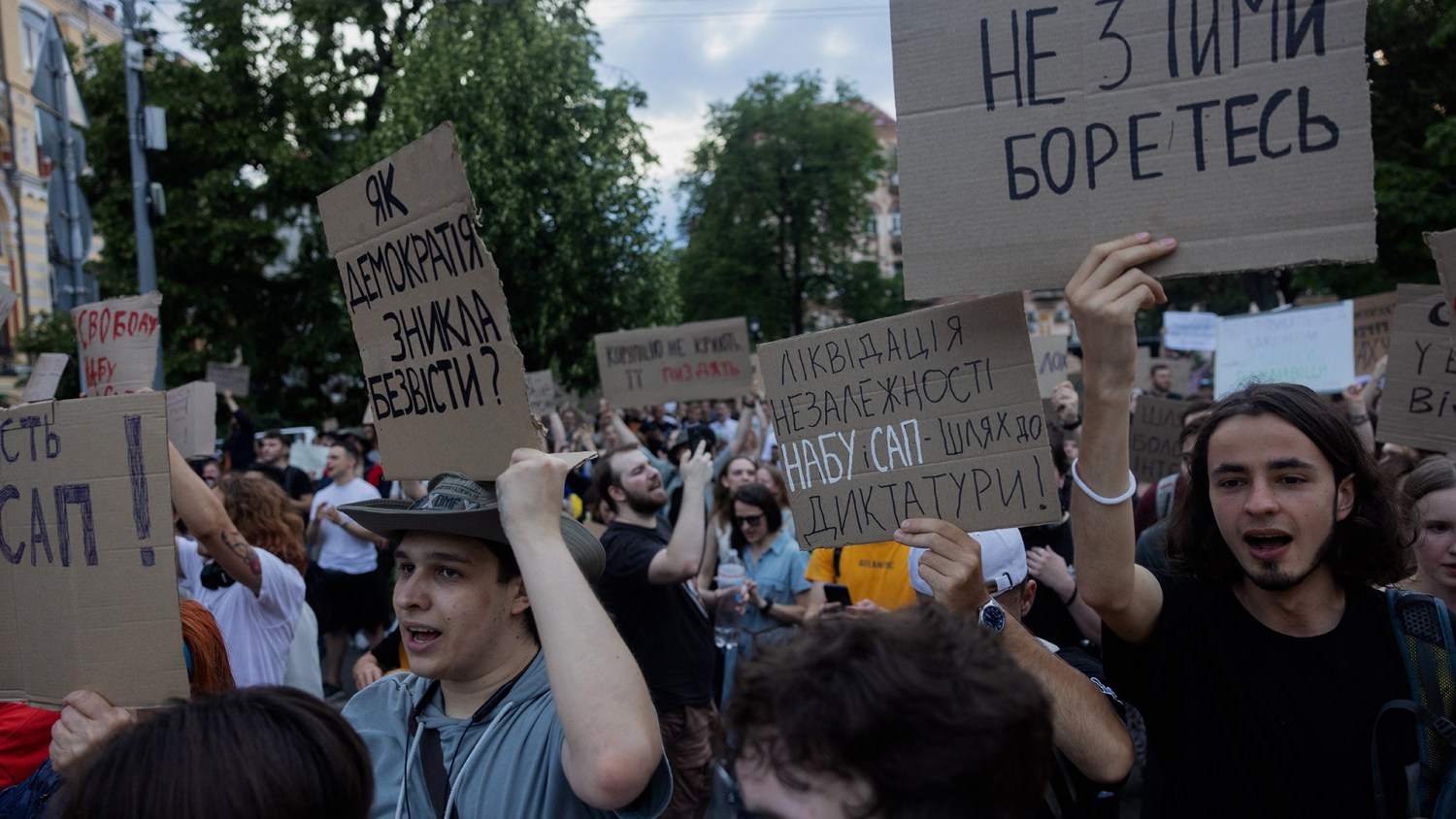
In a period marked by extraordinary resilience and collective struggle, Ukraine is now facing a growing wave of internal dissent that could challenge the fragile unity forged during wartime. At the center of this unrest is President Volodymyr Zelenskyy, whose leadership—once hailed as a unifying force in the face of foreign aggression—is now drawing criticism from various corners of Ukrainian society.
The public’s dissatisfaction is being expressed more openly, especially as the conflict continues indefinitely. The economic challenges, the weariness from the extended confrontation, and increasing worries about governmental actions are changing the nature of political discussions within the nation. Though Zelenskyy still embodies Ukraine’s defiance internationally, at home, disappointment is increasing.
One of the key points of contention stems from perceptions of transparency and governance. As military operations continue, citizens and civic leaders alike are demanding clearer communication, more inclusive decision-making, and better accountability from those in power. Questions are being raised not only about military strategy, but also about domestic issues such as corruption, economic management, and the treatment of conscription and military service.
Zelenskyy’s administration, initially celebrated for its swift mobilization and strong messaging in the early stages of the conflict, now faces a more critical public. Some citizens feel their voices are being overlooked in favor of centralized authority, and frustrations are boiling over in local protests, online forums, and independent media platforms.
Among young individuals and civic advocates, there is an increasing perception that today’s leadership needs to adapt to address the new stage of the conflict. As Ukraine transitions from urgent survival to prolonged resistance and reconstruction, the demand for openness, collective sacrifice, and democratic procedures has intensified. Requests for changes that were previously delayed due to national security concerns are now reemerging as key topics in public discussion.
This internal strain presents a complex challenge. On one hand, national unity remains essential for the country’s ability to resist external aggression. On the other hand, open societies naturally produce diverse viewpoints, especially in times of crisis. The tension between these two realities is playing out in real time across Ukraine’s political and social landscape.
Critics argue that the administration has not done enough to distribute the burdens of war equitably. Reports of uneven enforcement of military service, alleged favoritism, and insufficient support for wounded soldiers and displaced families have fueled resentment. For many, the sacrifices made on the frontlines must be met with genuine solidarity and fairness at all levels of society.
Economic pressures are also intensifying public anxiety. With inflation, unemployment, and infrastructure challenges straining everyday life, the population is looking to its leaders for answers. Aid from foreign partners has provided critical support, but questions persist about long-term economic stability and how resources are being managed internally.
Moreover, the mental and emotional strain of existing under perpetual danger is immeasurable. Families torn apart by conflict, cities marked by attacks, and communities dealing with loss are also facing political instability domestically. This intricate array of difficulties is reshaping the connection between citizens and their leaders.
Despite the mounting criticism, it is important to acknowledge that President Zelenskyy continues to maintain a significant level of support, particularly for his role in unifying Ukraine’s global allies and sustaining international attention on the conflict. His ability to represent Ukraine on the world stage has brought vital military and financial assistance, even as domestic pressures increase.
Nonetheless, Ukraine’s leaders during the war are now challenged with finding a balance between international relations and domestic changes. Handling the demands of war management while upholding democratic credibility and the confidence of the populace necessitates ongoing adjustments. As the voices of civil society increase in strength, the government needs to adjust in a manner that maintains unity while allowing for differences of opinion.
What lies ahead for Ukraine will depend not only on the outcome of its military efforts, but also on its ability to maintain social and political resilience from within. If the government can respond constructively to the criticism—by engaging with civil society, upholding transparency, and distributing responsibility fairly—it may yet strengthen the very unity that is being tested.
Reflective moments within are challenging but can also present chances for rejuvenation. Ukraine’s continuous battle for self-governance is more than just a matter of land or protection—it is equally about the identity it aims to establish. Paying attention to its citizens, even in times of discord, might be among the most effective methods to support that aspiration.