
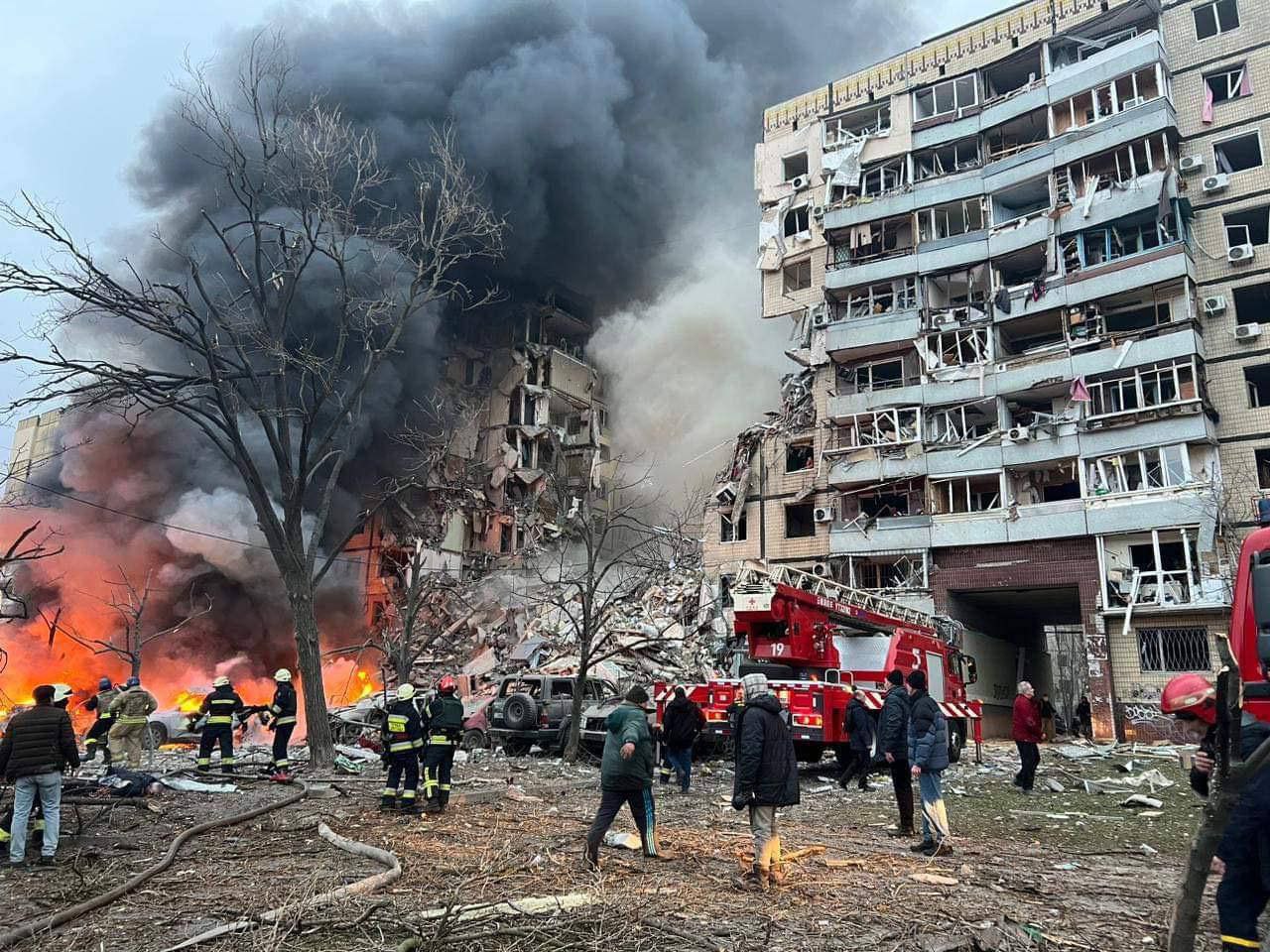
In a recent increase in confrontations, Ukrainian authorities have stated that the southern city of Kryvyi Rih, known as the birthplace of President Volodymyr Zelensky, faced a massive drone attack by Russian forces. This nocturnal offensive, characterized by local officials as one of the most severe in recent times, emphasizes the continuing risk to urban areas distant from active battle lines and highlights the changing strategies of aerial combat in the dispute.
According to the regional military administration, dozens of Iranian-made Shahed drones were launched in a coordinated offensive targeting infrastructure and civilian areas across the city. Air defense units were able to intercept many of the drones, but several managed to strike residential zones and industrial facilities, causing property damage and civilian casualties. Emergency response teams were deployed shortly after the attack to assess the damage and assist those affected.
President Zelensky of Ukraine, a native of Kryvyi Rih, denounced the attacks in his statement, highlighting the steadfastness of Ukrainians and their resolve to protect their towns. He stressed that assaulting regions inhabited by civilians constitutes not just a breach of global laws but also an act of terrorism designed to instill fear and chaos.
Initial assessments indicate that power plants and transportation centers might have been intended as targets, a strategy that Russian forces are increasingly using to disrupt supply chains and lower morale. In earlier months, comparable drone and missile strikes have significantly affected Ukraine’s energy systems, particularly during colder periods when heating is crucial strategically.
The timing of this attack aligns with larger changes on the battlefield. As the frontlines remain mostly unchanged and both parties face logistical difficulties, drone warfare has become a significant element of Russia’s comprehensive strategy. Unmanned aerial vehicles (UAVs) are being utilized not only for observation but progressively for accurate, cost-effective attacks aimed at challenging Ukraine’s air defense systems and depleting its resources.
Military analysts note that these drone attacks serve multiple purposes. Beyond their immediate destructive capacity, they compel Ukraine to expend valuable interceptors and manpower, weakening its broader defensive posture. The relatively low cost and ease of production of these drones, particularly the Shahed-136 models, allow Russia to maintain a persistent threat even as its missile stockpiles dwindle.
Kryvyi Rih, located in the Dnipropetrovsk region, is a significant industrial hub and holds both strategic and symbolic importance. Its connection to President Zelensky adds emotional weight to the attacks, and some observers believe that targeting the city may be an attempt to undermine his personal credibility or resolve. Despite this, Zelensky has continued to visit the region during the war, demonstrating solidarity with local populations and reinforcing national unity.
Authorities in Kryvyi Rih have mentioned that emergency teams operated overnight to put out flames and save individuals caught in collapsed structures. Multiple individuals sustained injuries during the assaults, while the overall number of victims is still being assessed. Videos shared by officials display burnt wreckage, ruined residential buildings, and burnt-out cars, starkly highlighting the conflict’s impact on civilian existence.
The global community has reacted to the recent events. Various European Union leaders and U.S. authorities have released statements denouncing the assault and reiterating their support for Ukraine’s sovereignty. Human rights groups have urged for increased efforts to record possible breaches of humanitarian law and to ensure responsibility through international legal frameworks.
In the meantime, Ukraine persists in requesting more sophisticated air defense systems and surveillance technology from its allies. As drone warfare grows more prevalent in the conflict, authorities insist that enhancing defensive measures is crucial to safeguarding both strategic resources and civilian communities.
In recent months, Western countries have pledged additional military aid, including systems designed to detect and intercept drones. However, Ukrainian defense forces remain stretched, balancing the need to protect major urban areas with ongoing counteroffensive operations in contested territories.
The extensive strategic consequences of Russia’s ongoing dependence on drone attacks are still developing. Certain analysts see this change as an indication of limited resources and the failure to accomplish goals using standard military methods. Meanwhile, others consider it as a strategic adjustment meant to weaken Ukrainian fortitude through continuous strain and damage to infrastructure.
The recent surge of drone strikes also prompts inquiries regarding the future direction of the conflict. As peace talks remain at an impasse with no definitive solution visible, both parties seem entrenched in an enduring struggle where technological advancements and asymmetric strategies are taking on a more prominent role.
For residents of Kryvyi Rih, the immediate concern remains survival and recovery. Local authorities have urged citizens to remain vigilant, adhere to air raid warnings, and support community efforts to rebuild. Despite the devastation, many residents have expressed determination to remain in their city and continue daily life as an act of defiance against aggression.
As the conflict grinds on, the human cost continues to mount. The drone strikes on Kryvyi Rih serve as yet another example of the war’s evolving dynamics, where frontlines are no longer defined solely by geography but by the reach of unmanned technology and the resolve of those under fire.
The reported drone barrage on Kryvyi Rih underscores the expanding role of UAVs in modern warfare and reflects a broader strategic shift by Russian forces. While Ukraine’s defenses managed to intercept many of the incoming drones, the incident reveals ongoing vulnerabilities and the urgent need for sustained international support. As the war enters a new phase, cities like Kryvyi Rih remain on the frontline—not only of conflict, but of resilience and national identity.