
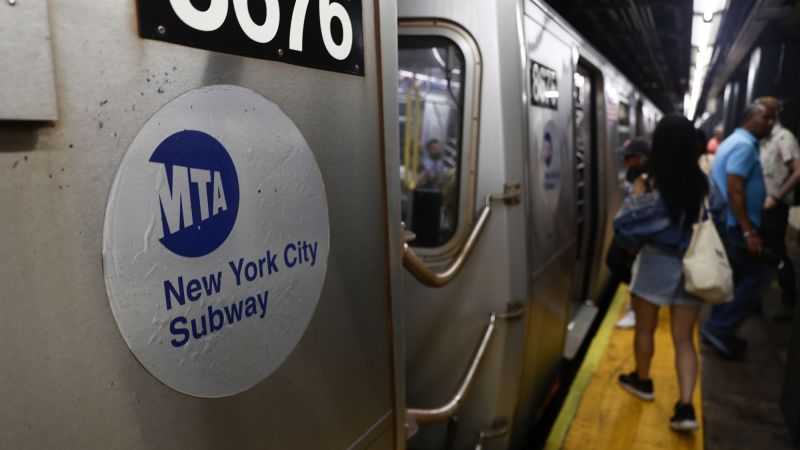
The Metropolitan Transportation Authority (MTA) in New York City has partnered with Google for a groundbreaking pilot program focused on enhancing the reliability of its old subway network. Utilizing Google’s mobile technology, the effort aims to detect and resolve rail problems before they cause service interruptions. Named “TrackInspect,” the project signifies a considerable advancement in applying artificial intelligence and contemporary technology to public transportation.
The Metropolitan Transportation Authority (MTA) in New York City has teamed up with Google in an innovative pilot project aimed at improving the reliability of its aging subway system. By leveraging Google’s smartphone technology, the initiative seeks to identify and address track issues before they lead to service disruptions. Known as “TrackInspect,” the program represents a significant step forward in integrating artificial intelligence and modern technology into public transit.
The pilot project, which began in September 2024 and concluded in January 2025, involved installing Google Pixel smartphones on select subway cars. These devices were tasked with collecting audio and vibration data to detect potential track defects. The data was then analyzed using Google’s cloud-based AI systems, which flagged areas requiring closer inspection by MTA personnel.
The collaboration between the MTA and Google forms part of a wider initiative to update New York’s 120-year-old subway network, which still struggles with issues tied to its outdated infrastructure and regular delays. Although the pilot program showed encouraging outcomes, uncertainties persist regarding the potential expansion of TrackInspect due to the MTA’s budgetary limitations.
The MTA’s partnership with Google is part of a broader effort to modernize New York’s 120-year-old subway system, which continues to face challenges related to aging infrastructure and frequent delays. While the pilot program demonstrated promising results, questions remain about whether TrackInspect will be expanded given the financial constraints facing the MTA.
New York City’s commuters frequently encounter subway delays as a recurring issue. Towards the end of 2024, the MTA disclosed that tens of thousands of delays were occurring monthly, with December alone surpassing 40,000 incidents. These interruptions stem from multiple causes, such as track problems, construction activities, and crew shortages.
The TrackInspect initiative focuses on tackling a crucial element of the problem: pinpointing and correcting mechanical issues before they worsen. Throughout the pilot phase, six Google Pixel smartphones were placed in four R46 subway cars, recognizable by their unique orange and yellow seats. These devices captured 335 million sensor readings, more than one million GPS points, and 1,200 hours of audio data.
The smartphones were strategically located both inside and beneath the subway cars. The external devices were fitted with microphones to record both sound and vibrations, whereas the internal phones had their microphones deactivated to ensure passenger conversations weren’t recorded. These internal devices focused exclusively on capturing vibrations to identify any irregularities in the tracks.
Rob Sarno, serving as an assistant chief track officer for the MTA, was integral to the project. His duties involved examining audio clips that the AI system flagged for potential track issues. “The system pinpoints zones with unusual decibel levels, possibly signaling loose joints, damaged rails, or other defects,” Sarno elaborated.
Rob Sarno, an assistant chief track officer with the MTA, played a key role in the project. His responsibilities included reviewing audio clips flagged by the AI system to identify potential track issues. “The system highlighted areas with abnormal decibel levels, which could indicate loose joints, damaged rails, or other defects,” Sarno explained.
The A train line, chosen for the pilot, offered a diverse testing environment with both underground and above-ground tracks. It also included sections of recently constructed infrastructure, providing a baseline for comparison. While not all delays on the A line are caused by mechanical issues, the data captured during the pilot could help address recurring problems and improve overall service.
The TrackInspect initiative produced promising results, as the AI system accurately identified 92% of defect locations that were confirmed by MTA inspectors. Sarno estimated his own accuracy rate in anticipating track defects from audio data to be approximately 80%.
The initiative also featured an AI-driven tool based on Google’s Gemini model, enabling inspectors to inquire about maintenance procedures and repair records. This conversational AI furnished inspectors with straightforward, actionable insights, which further streamlined the maintenance workflow.
Despite its achievements, the pilot program brings up questions concerning its scalability and expenses. The MTA has not revealed the potential cost of deploying TrackInspect throughout its entire subway network, which comprises 472 stations and accommodates over one billion riders each year. The agency is also facing financial difficulties, requiring billions of dollars to finish ongoing infrastructure projects.
Google participated in the pilot as part of a proof-of-concept initiative that was provided at no expense to the MTA. However, broadening the program would probably demand substantial investment, making financing a key factor for those making decisions.
An increasing trend in transit advancement
New York’s collaboration with Google is part of a wider movement where cities around the globe are utilizing artificial intelligence and smart technologies to enhance public transit systems. For instance, New Jersey Transit has employed AI to study passenger flow and manage crowds, while the Chicago Transit Authority has established AI-based security systems to identify weapons. In Beijing, facial recognition technology has been adopted as an alternative to conventional transit tickets, minimizing wait times during busy hours.
New York’s partnership with Google is part of a broader trend in which cities worldwide are adopting artificial intelligence and smart technologies to improve public transit systems. For example, New Jersey Transit has used AI to analyze passenger flow and crowd management, while the Chicago Transit Authority has implemented AI-driven security measures to detect weapons. In Beijing, facial recognition technology has been introduced as an alternative to traditional transit tickets, reducing wait times during peak hours.
Google itself has collaborated with other transportation agencies in the past. The tech giant has developed tools to enhance Amtrak’s scheduling and partnered with parking technology providers to integrate street parking data into Google Maps. However, the scale and complexity of New York’s subway system make this project particularly ambitious.
Looking forward
Although the TrackInspect pilot has concluded, the MTA is investigating collaborations with additional technology providers to further improve its maintenance procedures. The agency is also evaluating data from the pilot to assess its effects on minimizing delays and enhancing service. Initial signs indicate that specific types of delays, including those from braking problems and track defects, declined on the A line during the pilot. However, the MTA warns that more analysis is required to verify a direct connection to the program.
While the TrackInspect pilot has ended, the MTA is exploring partnerships with other technology providers to further enhance its maintenance processes. The agency is also analyzing data from the pilot to determine its impact on reducing delays and improving service. Early indications suggest that certain types of delays, such as those caused by braking issues and track defects, decreased on the A line during the pilot period. However, the MTA cautions that further analysis is needed to confirm a direct link to the program.
Mientras Sarno reflexiona sobre el proyecto, destaca el potencial de las soluciones impulsadas por inteligencia artificial para transformar el transporte público. “Esta tecnología nos permite identificar problemas con anticipación, reaccionar más rápido y, en última instancia, ofrecer un mejor servicio a nuestros clientes,” afirmó.
As Sarno reflects on the project, he emphasizes the potential of AI-driven solutions to transform public transportation. “This technology allows us to detect problems earlier, respond faster, and ultimately provide better service to our customers,” he said.
The MTA’s collaboration with Google underscores the potential of public-private partnerships to drive innovation in critical infrastructure. Whether TrackInspect becomes a permanent fixture in New York’s subway system remains to be seen, but its success highlights the possibilities of integrating cutting-edge technology into the daily lives of commuters.