
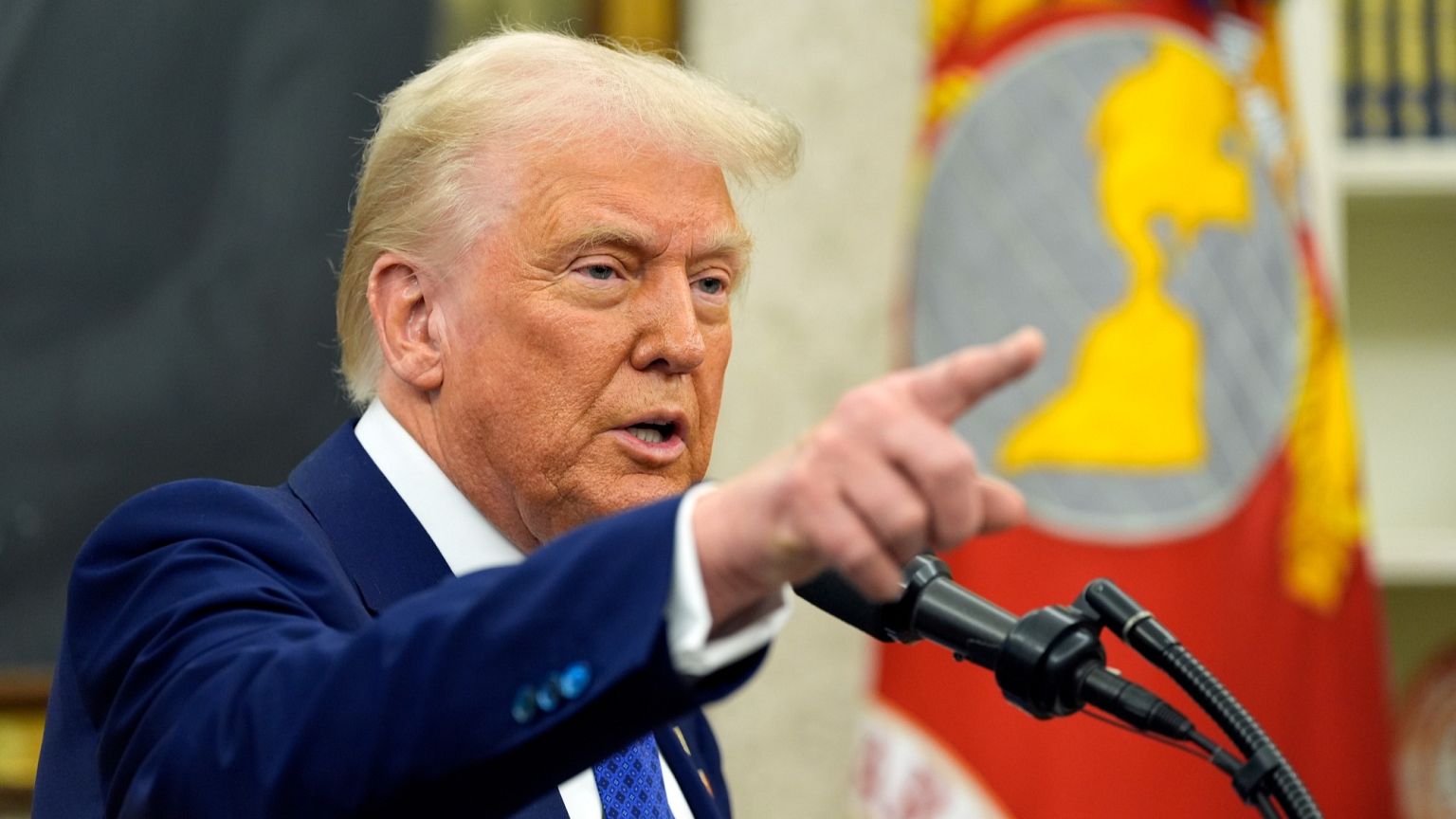
The discussion about the foreign policy accomplishments of former president Donald Trump continues to be one of the most debated elements of his presidency. One of his most audacious statements was the claim that he had brought six wars to a close during his term. For his backers, this was touted as proof of his dedication to steering clear of expensive international conflicts and focusing on American priorities. However, detractors saw the assertion as either an overstatement or a distortion of the ongoing disputes. To evaluate this, it is crucial to closely analyze what “ending a war” truly signifies and how Trump’s actions matched—or did not match—that benchmark.
When evaluating this claim, it is crucial to recognize that few modern conflicts conclude with formal declarations of victory or surrender. Instead, wars often shift into different phases: some become frozen disputes, others transition into counterterrorism operations, and many simmer in a state of fragile ceasefire. In this context, Trump’s foreign policy initiatives did not necessarily end wars in the traditional sense but sought to scale back U.S. involvement in certain regions. The most prominent example was Afghanistan, where his administration negotiated directly with the Taliban to secure an agreement aimed at withdrawing American troops. Though the full withdrawal occurred under his successor, the groundwork for reducing America’s longest-running war was largely shaped during his presidency.
Beyond Afghanistan, Trump advocated for reducing the U.S. military presence in Iraq and Syria. His government announced the dismantling of the Islamic State’s territorial caliphate, a key achievement that signified a transition from major combat efforts to strategic counterterrorism initiatives. Although this was a notable progression, analysts contend that it did not fully resolve the hostilities, as militant factions continued to operate and instability lingered in the area. Nevertheless, for the Trump administration, presenting the decline of ISIS as a conclusive triumph enabled the narrative of having “concluded” a war to resonate with his base.
Trump also managed the downsizing of military forces in various areas, including Somalia, where U.S. troops had been involved in counterinsurgency efforts against the al-Shabaab militant group. The choice to decrease their presence aligned with his larger “America First” doctrine, which sought to steer clear of extended military engagements overseas. Nonetheless, detractors emphasize that moving forces or diminishing direct engagement does not automatically address the core conflict, implying that the conflicts themselves persisted, though with reduced American visibility.
Beyond pulling back troops, Trump strongly focused on diplomatic agreements, which he highlighted as moves towards peace. The Abraham Accords, as an illustration, established normalized ties between Israel and various Arab countries, marking a diplomatic triumph that eased tensions in a tumultuous area. Although these accords did not formally conclude an ongoing war, they were portrayed by his administration as peace-promoting successes that aligned with his larger narrative of diminishing conflict.
Despite these actions, skeptics argue that claiming the end of six wars stretches the definition of “ending” to its limits. In some cases, fighting continued, though American involvement was reduced. In others, diplomatic agreements addressed only part of the conflict without resolving deeper issues. Moreover, some conflicts were already winding down or evolving before Trump entered office, raising questions about whether his administration can take full credit for their trajectory.
The larger question is whether reducing U.S. engagement abroad equates to ending wars. Trump’s policies clearly emphasized withdrawal and de-escalation over military escalation. Compared with previous administrations, he avoided launching new large-scale interventions and frequently criticized America’s role as the world’s policeman. For many Americans weary of decades-long wars, this approach resonated, even if the outcomes were more complex than campaign rhetoric suggested.
Analyzing from another angle, Trump’s assertion embodies a mix of political maneuvering and some factual accuracy. During his time, he directed notable reductions in military forces, backed groundbreaking peace deals, and aimed to redefine the United States’ position on the world stage. However, the argument that six conflicts were completely resolved under his administration is questionable due to ongoing unrest and enduring conflict in several areas.
El debate sobre si Trump realmente concluyó seis guerras subraya la dificultad de evaluar el éxito en los conflictos actuales. En la era contemporánea, los conflictos casi nunca terminan con resoluciones claras; en su lugar, se convierten en nuevas formas de lucha, frecuentemente sin un desenlace. Aunque la administración de Trump puede reconocerle la reducción de la participación directa de Estados Unidos en varios frentes, afirmar que puso fin a seis guerras simplifica en exceso una realidad que es mucho más compleja.
For supporters, the claim reinforces the image of a leader who prioritized American interests and resisted foreign entanglements. For critics, it underscores the gap between political rhetoric and on-the-ground realities. What remains undeniable is that Trump’s foreign policy marked a shift in tone and direction—away from interventionism and toward retrenchment—even if the wars themselves did not truly end.