
Our website uses cookies to enhance and personalize your experience and to display advertisements (if any). Our website may also include third party cookies such as Google Adsense, Google Analytics, Youtube. By using the website, you consent to the use of cookies. We have updated our Privacy Policy. Please click the button to view our Privacy Policy.

Economy

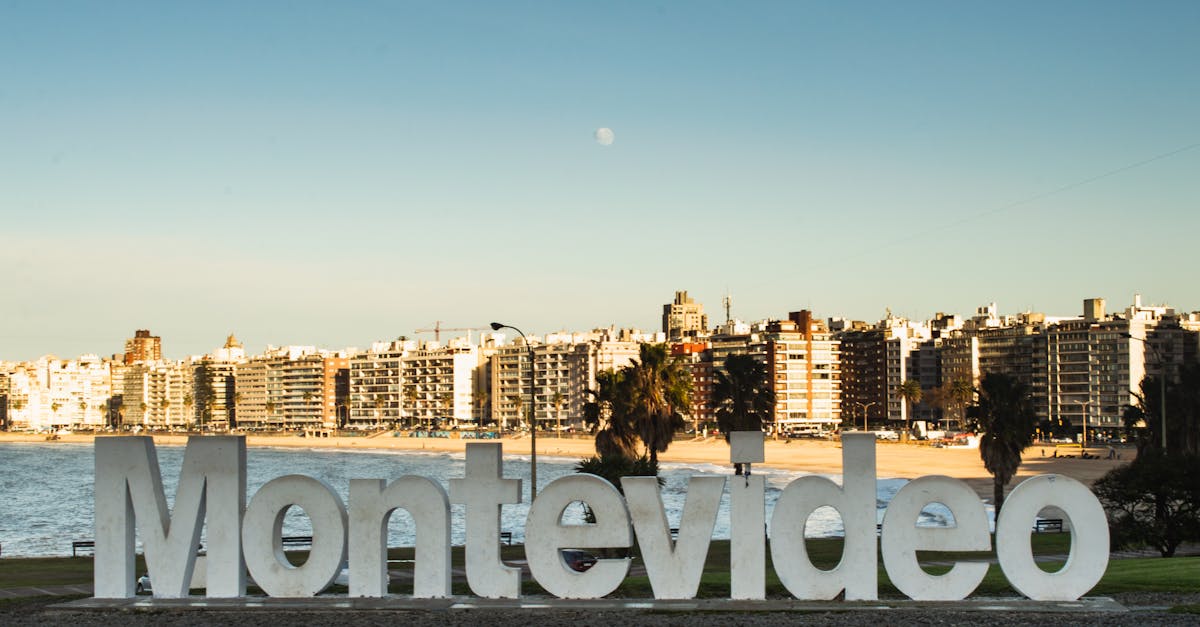
Montevideo, en Uruguay: cómo escalan las fintech con cumplimiento y confianza del usuario

Uruguay Fintech: Navigating Trust and Scalability

Montevideo, Uruguay’s capital, blends a compact metropolitan landscape with extensive regional links, a reliable legal framework, and a highly trained software engineering talent pool. For fintech founders, the city provides an efficient setting for product development, access to bilingual professionals, and close reach to major Latin American markets. Startups based in Montevideo can expand across the region while taking advantage of favorable time zones that support nearshore collaboration with teams in North America and Europe.Key contextual points:Size and density: Montevideo accounts for nearly one-third to one-half of Uruguay’s entire population, bringing together users, technical talent, and demand for financial services…
Read more
Jeff Bezos-owned Washington Post conducts widespread layoffs, gutting a third of its staff

Jeff Bezos’ Washington Post: One-Third of Staff Laid Off

The latest wave of layoffs at The Washington Post marked a breaking point for one of the most influential newsrooms in the United States. Beyond the immediate loss of jobs, the cuts revealed structural tensions between profitability, editorial mission, and ownership priorities.Early Wednesday morning, employees throughout The Washington Post learned that about one‑third of the company’s staff had been cut, a development that sent a jolt through a newsroom already worn down by prolonged instability, dropping subscription numbers, and ongoing reorganizations. Team members were told to remain at home while the notifications were delivered, a directive that highlighted both the…
Read more
HBO Max and Paramount+ will combine after WBD merger

Warner Bros. Discovery: Merging HBO Max and Paramount+

Paramount has confirmed plans to merge its streaming service Paramount+ with HBO Max, creating a single, unified platform that aims to strengthen its position in the competitive streaming market. The announcement was made during the company’s latest investor call.A significant transformation across the streaming worldDuring Paramount’s first investor call since finalizing its acquisition of Warner Bros. Discovery, CEO David Ellison outlined the company’s vision for combining the two streaming services. He emphasized that the integration of Paramount+ and HBO Max will result in a more powerful platform for subscribers worldwide.“We will combine the streaming portfolios of the two companies into…
Read more
Nigeria: CSR cases supporting inclusive fintech and community financial education

Fintech & Financial Education: A Nigerian CSR Perspective

Nigeria is Africa’s largest market by population and one of its fastest-growing digital economies. High mobile penetration, a young population, and a flourishing startup ecosystem have made fintech a central force for payments, savings, credit and small-business services. At the same time, significant segments of the population remain financially excluded or under-served: women, rural communities, informal small businesses and low-income households often lack access to affordable financial services and the knowledge to use them safely. Corporate social responsibility (CSR) in Nigeria has increasingly targeted these gaps by supporting inclusive fintech solutions and community financial education. These initiatives blend product access,…
Read more
Dow tumbles more than 800 points as tariff uncertainty and AI disruption fears roil markets

Tariff Uncertainty & AI Disruption Fears Send Dow Down 800 Points

Wall Street faltered early in the week as fresh trade frictions and rising unease over artificial intelligence rattled investors. Stocks fell across the board, while traditional safe havens advanced amid mounting volatility.Financial markets began the week on edge, as a blend of policy ambiguity and industry‑focused concerns unsettled traders across leading exchanges, with fresh tariff proposals from President Donald Trump and ongoing doubts about the long‑term influence of artificial intelligence dragging sentiment, driving stocks downward, and boosting interest in safer assets.The Dow Jones Industrial Average posted a pronounced downturn, falling by more than 800 points in what became its most…
Read more
Barcelona, in Spain: How startups scale internationally while protecting product focus

Barcelona’s Startup Scene: International Scaling with Product at Core

Barcelona ranks among Europe’s most prominent tech hubs. Its time zone, transport infrastructure, cultural magnetism, and dense talent network turn it into a practical base for teams pursuing swift international growth. The city’s ecosystem consistently produces startups that expand worldwide, ranging from consumer marketplace ventures to enterprise software companies. Scaling from Barcelona demands the same rigor as any other hub, yet local strengths — access to international talent, robust product and design capabilities, and frequent global industry events — enable founders to accelerate their momentum as long as they keep product focus at the core.Core tension: growth versus product focusStartups…
Read more
He worked on Wall Street for nearly 50 years. Here’s what he learned about your finances

Decades on Wall Street: His Insights on Personal Finance

Howard Silverblatt launched his Wall Street career when the S&P 500 lingered under 100 points, and he concluded it as the index was nearing 7,000. Across nearly 49 years, he observed sweeping rallies, punishing downturns, and a profound evolution in how Americans approach investing and retirement savings. His insights deliver a rare, long-range view of risk, discipline, and lasting financial durability.When Howard Silverblatt first reported to work in May 1977, the S&P 500 stood at 99.77 points. By the time he retired in January after almost five decades at Standard & Poor’s—now S&P Dow Jones Indices—the benchmark index had climbed…
Read more
Retail sales were unexpectedly flat in December

Why Were December Retail Sales Unexpectedly Flat?

December is typically regarded as a peak month for US retail, driven by holiday spending and end‑of‑year deals, yet consumer outlays unexpectedly flattened, providing a more restrained view of household activity and prompting fresh doubts about economic traction as the new year approaches.The latest retail sales report highlighted an unexpected lull in consumer activity during a period when spending generally picks up, with figures from the US Commerce Department indicating that December retail sales were flat compared with the prior month, a notable cooldown after November’s strong rise, surprising economists who had anticipated continued, though slower, growth, and although the…
Read more
France: How companies finance innovation while managing labor and compliance obligations

Innovating in France: Funding, Labor & Compliance

France blends an extensive public safety net and fairly protective labor regulations with a robust landscape of public incentives, bank lending, venture capital, and corporate R&D. This combination offers both advantages and limitations: firms can tap into diverse funding avenues to support innovation, yet they must also navigate substantial labor‑related expenses and compliance duties that shape the cost structure and scheduling of innovation initiatives.Scope and settingR&D intensity: France’s gross domestic spending on research and development is roughly in the low 2-percent range of GDP, below the aspirational 3-percent target adopted by some members of the European Union. That means public…
Read more
Italy: How family enterprises plan succession without disrupting strategic direction

Maintaining Strategic Direction in Italian Family Succession

Family-owned enterprises hold a predominant place within the Italian private sector, both in scale and cultural weight. Research and academic analyses suggest that these family-run companies make up a substantial majority of Italy’s businesses and generate a considerable portion of private employment and economic value. Within such firms, succession is far more than a staffing transition; it represents a pivotal moment that can safeguard long-built strategic direction or, conversely, lead to fragmentation, weakened market standing, and financial pressure.This article explains how Italian family enterprises plan succession without disrupting strategic direction, with concrete governance mechanisms, legal and fiscal workarounds, human-capital practices,…
Read more