
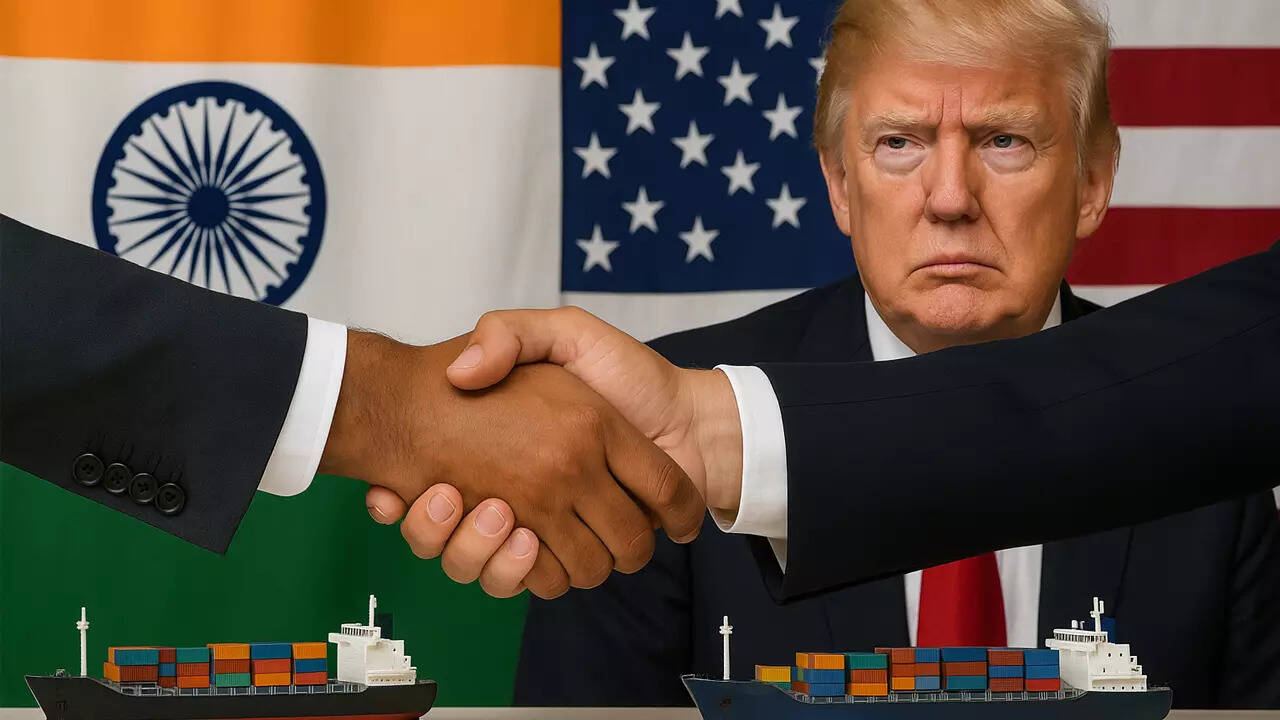
Former U.S. President Donald Trump has indicated that India, a country he has previously described as a “good friend,” may be subject to steep tariffs—potentially reaching 25%—if trade imbalances are not addressed. His remarks highlight the continuing focus on trade policy as a key pillar of his economic agenda, particularly in relation to countries with which the United States maintains complex economic relationships.
Trump’s comments come amid ongoing discussions about the future of global trade and the role of tariffs as leverage in negotiating better terms for American businesses. Although India and the U.S. have maintained relatively strong diplomatic and strategic ties in recent years, economic friction remains, especially regarding market access, duties on American goods, and technology regulations.
Throughout his presidency and beyond, Trump has frequently used tariffs as a tool to push for changes in trade practices that he views as unfavorable to the U.S. His stance toward India follows this familiar pattern, where even longstanding allies are not exempt from scrutiny or potential economic penalties if he believes American interests are not being adequately protected.
In his recent statements, Trump reiterated his appreciation for India’s leadership and its relationship with the United States but stressed that being an ally does not grant immunity from economic accountability. According to him, trade must be “fair and reciprocal,” and any disparity—particularly if it disadvantages American industries—will be subject to correction through tariffs or other mechanisms.
The potential tariff hike of up to 25% would represent a significant escalation in trade tensions between the two countries. Such a move could affect a wide range of Indian exports to the U.S., from textiles and pharmaceuticals to machinery and automotive parts. India, one of the fastest-growing economies in the world, has become a key trading partner for the United States, with bilateral trade valued in the hundreds of billions of dollars annually.
Critics argue that increasing tariffs could disrupt not only the economic ties between the two nations but also the broader geopolitical partnership that has been strengthening over the past decade. India plays a crucial role in U.S. foreign policy, especially in the Indo-Pacific region, where it is seen as a counterweight to China’s growing influence.
Although these issues exist, Trump’s stance demonstrates a comprehensive approach that emphasizes national economic benefits over collaborative efforts with multiple nations. His government, and possibly a future one led by him, perceives trade deficits and uneven agreements as detrimental to American production and workforce. In Trump’s view, tariffs extend beyond mere economic measures; they serve as political instruments that showcase firmness on trade and address voters’ worries regarding employment and industrial downturns.
During his presidency, the U.S. withdrew India from the Generalized System of Preferences (GSP), a program that allowed certain Indian goods to enter the U.S. duty-free. That decision was justified on the grounds that India had not provided sufficient access to its markets for American companies. In response, India imposed retaliatory tariffs on U.S. products, including agricultural goods.
This back-and-forth set the stage for a more contentious trade relationship, even as both nations continued to deepen their military and strategic collaborations. While there have been efforts on both sides to resolve trade disputes through dialogue, the underlying tensions persist.
If tariffs were to be raised to the 25% level mentioned by Trump, the implications would likely be significant for Indian exporters. Sectors that rely heavily on the U.S. market could see reduced competitiveness, leading to potential job losses and supply chain disruptions. Small and medium-sized enterprises, which form a large portion of India’s export economy, would be particularly vulnerable.
For American consumers and businesses, the impact could also be felt through higher prices on imported goods and reduced availability of certain products. This would come at a time when inflationary pressures are already affecting the cost of living in the U.S., making any additional price hikes politically sensitive.
However, supporters of Trump’s approach argue that temporary pain is a necessary cost for long-term reform. They believe that tough trade measures are essential to reset relationships that have historically been lopsided and to compel trading partners to open their markets more fairly.
Indian officials have not issued an official response to Trump’s recent remarks, but past statements suggest that New Delhi remains committed to resolving trade issues through negotiation rather than confrontation. India has also taken steps in recent years to ease foreign investment rules, simplify regulations, and expand opportunities for international companies to operate within its borders—all in an effort to attract global partners and reduce friction.
The possibility of a renewed Trump presidency adds another layer of uncertainty to the global trade landscape. Businesses on both sides of the Atlantic and the Indian Ocean are closely monitoring political developments, knowing that leadership changes can quickly alter economic policy direction.
In the future, the United States and India will need to navigate the challenge of aligning national economic priorities with the long-term advantages of maintaining a collaborative relationship. Trade represents just one aspect of a complex partnership that also covers defense, technology, climate collaboration, and interpersonal connections.
While Trump’s rhetoric signals a potential shift in tone, the structural foundations of U.S.-India relations remain strong. Whether or not tariffs are ultimately imposed, the ongoing dialogue between the two nations will play a critical role in shaping the economic realities of the years to come.
Meanwhile, sectors, decision-makers, and shoppers will keep maneuvering within an environment where global commerce is influenced by political decisions and economic reasoning alike. The proposal of high tariffs might be used as a bargaining strategy, yet it highlights that in the current worldwide market, no partnership escapes tension—and no friend is exempt from economic adjustment.