
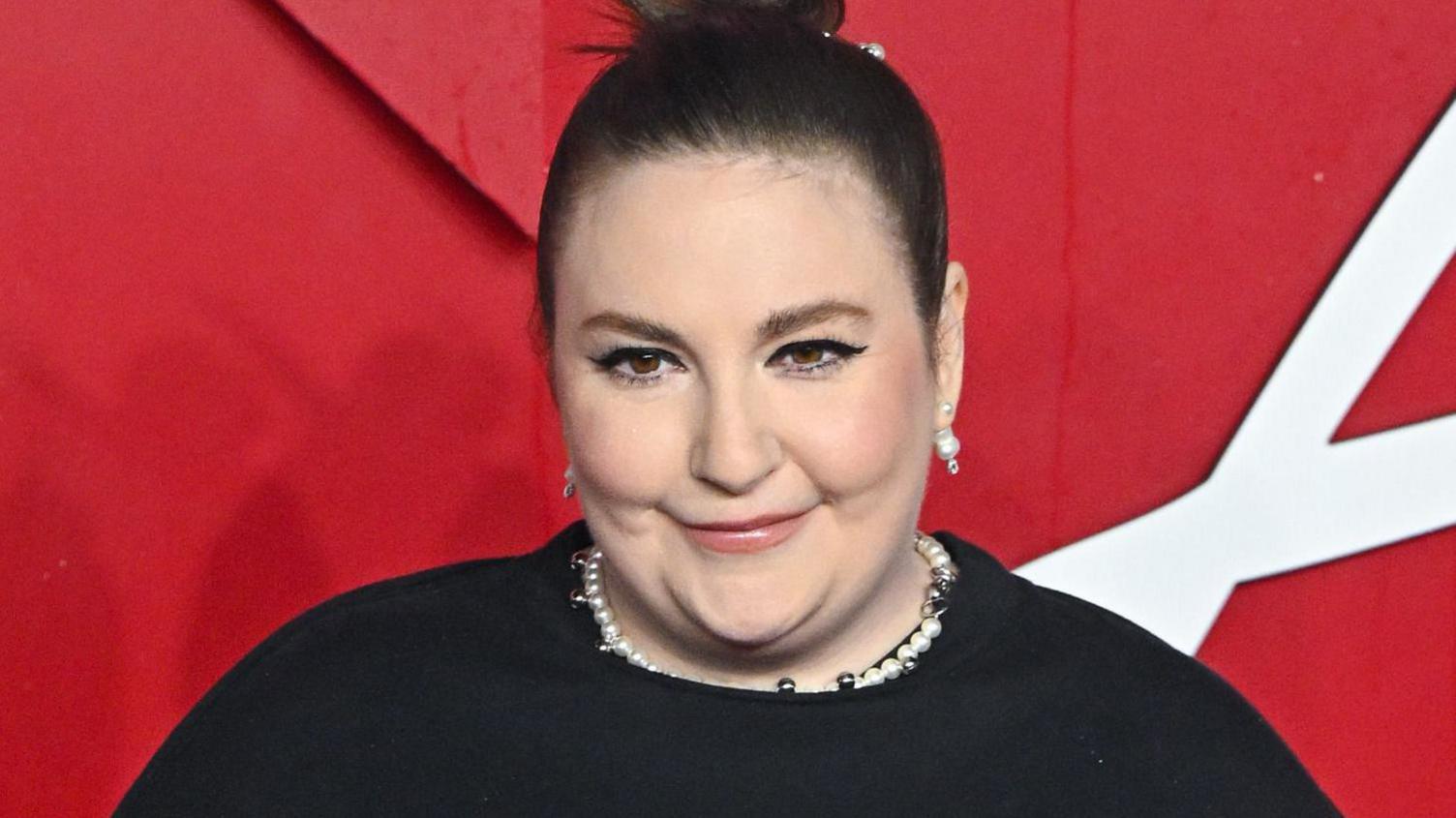
Lena Dunham has consistently been a prominent figure of both innovation and debate in the entertainment industry. Recognized for her honest storytelling and fearless approach to subjects typically deemed sensitive, the writer, director, and actor persistently defies norms—both in her professional sphere and in broader cultural discussions.
In her latest venture, Dunham turns her focus to London, where she has written and directed a romantic comedy that delves into the complexities of love, identity, and acceptance. Alongside this new creative chapter, she has been open about her ongoing experiences with fatphobia, self-worth, and the realities of dating in a world still dominated by unrealistic beauty standards.
Dunham, acclaimed for her innovative HBO series Girls, has crafted a career defined by her bold storytelling, frequently inspired by her personal experiences. In her latest movie, she maintains this genuine approach, delving into the tenderness and comedy that emerge as individuals strive for connection despite social pressures.
In her recent interviews, Dunham has openly discussed her choice to reside in London, a city she now regards as her home. She mentions that the British capital provided her with a unique sense of liberty and privacy that was elusive in the United States. The lifestyle pace, cultural variety, and the comparatively reduced tabloid attention gave her the opportunity she needed to recover, create, and develop.
Her move coincided with a deeper personal journey—one that involved re-evaluating how she saw herself, her relationships, and her body. For Dunham, navigating the entertainment industry as a woman who doesn’t conform to Hollywood’s traditional beauty ideals has been an uphill battle. Fatphobia, both overt and subtle, remains a pervasive force not only in media but in everyday interactions.
When discussing the fear of overweight bodies, Dunham emphasizes the subtle influences it has on how individuals are viewed and treated. She observes that although body positivity initiatives have advanced, deep-seated prejudices persist. She contends that social media frequently amplifies an idealized version of self-acceptance, which can fail to represent the genuine experiences of those who do not fit traditional norms.
Dunham’s openness about her own struggles with body image has resonated with many. Her willingness to show her body on screen—often in vulnerable or comedic situations—has sparked both praise and criticism. She remains steadfast in her belief that visibility matters: by presenting bodies of all shapes and sizes in narratives about love, friendship, and personal growth, she challenges narrow definitions of beauty and desirability.
Her latest movie, filmed in the lively districts of London, furthers this goal. The romantic comedy focuses on individuals who challenge clichés, adding humor and emotion to narratives that are frequently overlooked. Dunham expressed that she was attracted to the concept of crafting a rom-com featuring main characters who don’t always conform to the polished image typically portrayed in this genre.
Romantic comedies, she believes, have the power to shape how people see themselves and their relationships. Too often, these films reinforce the idea that only certain types of people—those who are young, thin, traditionally attractive—are worthy of love. By offering a different perspective, Dunham hopes to expand the narrative and create space for stories that feel more inclusive and authentic.
Apart from her on-screen pursuits, Dunham has been outspoken about the difficulties of dating outside the traditional standards of beauty society upholds. She considers the usual relationship advice given to women—most of which she believes to be outdated or based on damaging assumptions. The idea that a person needs to change to be lovable, or that their value is measured by romantic achievements, is something she aims to challenge through her creative work and public discussions.
Dunham’s own experiences with dating, chronicled both in her writing and interviews, paint a picture of someone who has navigated the highs and lows of relationships with humor and resilience. She speaks about the importance of self-compassion and the value of recognizing one’s inherent worth, regardless of societal messages that suggest otherwise.
Her advocacy extends beyond body image and dating. Dunham has long been involved in conversations around mental health, chronic illness, and feminism. She has been open about her struggles with endometriosis, a condition that not only impacted her physical health but also her emotional well-being and sense of identity. Her decision to undergo a hysterectomy in her early 30s was widely covered, and she used the experience to shed light on women’s health issues that are often overlooked or misunderstood.
By sharing her own journey, Dunham contributes to a broader dialogue about the intersection of health, body autonomy, and identity. She emphasizes the importance of listening to one’s body, advocating for proper medical care, and challenging the stigmas that surround both physical and mental health.
Her latest movie explores these topics in a nuanced yet important manner. It tells the tale of flawed individuals, genuine physiques, and the common longing for connection. Utilizing humor and vulnerability, the story encourages audiences to reflect on how love is formed not by physical flawlessness but through sincerity, compassion, and collective humanity.
The choice to set the story in London adds an additional layer of charm and diversity. Dunham has spoken about her affection for the city, describing it as a place where she felt she could reinvent herself without the burden of constant scrutiny. The cosmopolitan nature of London, with its rich tapestry of cultures and voices, serves as the perfect setting for a story that seeks to challenge conformity and celebrate individuality.
For Dunham, this movie signifies her comeback to directing after years dedicated to writing and producing. She describes the experience as highly satisfying, giving her the opportunity to narrate a story that feels intimate yet relatable. It also showcases her development as an artist—one who embraces evolution and is eager to face fresh creative challenges.
The reception to her work has always been mixed, with Dunham herself acknowledging that her voice is not for everyone. Yet her commitment to honesty, even when uncomfortable, remains a cornerstone of her approach to storytelling. Whether through television, film, or essays, she continues to carve out space for narratives that defy easy categorization.
Looking forward, Dunham appears as energetic as ever. Beyond her contributions to cinema, she continues to engage in projects related to literature and television. Her production company is dedicated to championing diverse narratives and voices that might face challenges in accessing mainstream channels. By fostering mentorship and partnerships, she aims to empower new generations of storytellers who offer innovative viewpoints to the industry.
At its heart, Dunham’s creative journey is about more than just personal expression—it’s about challenging the frameworks that dictate who gets to be seen and heard. Her work underscores the importance of representation in all its forms, reminding audiences that stories about love, identity, and resilience belong to everyone.
As her latest romantic comedy is about to be released, Lena Dunham keeps exploring the blend of personal insights and cultural observations with the characteristic audacity that has marked her career. Despite being divisive, her voice still plays a crucial role in the enduring discussion about our identity, self-perception, and the narratives we decide to share.